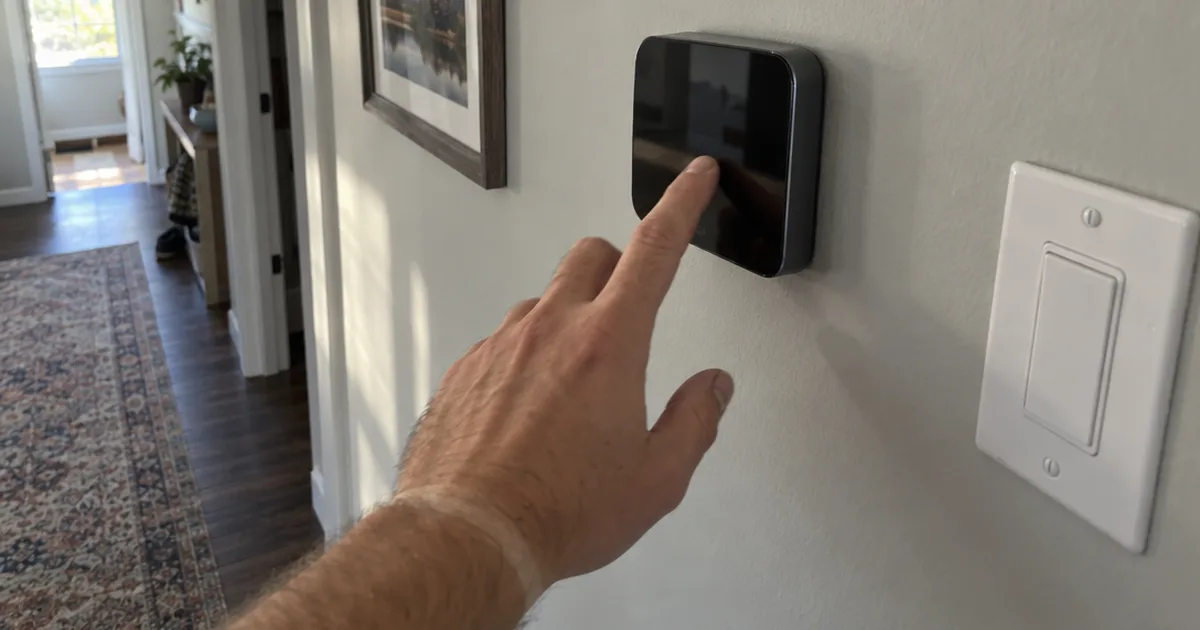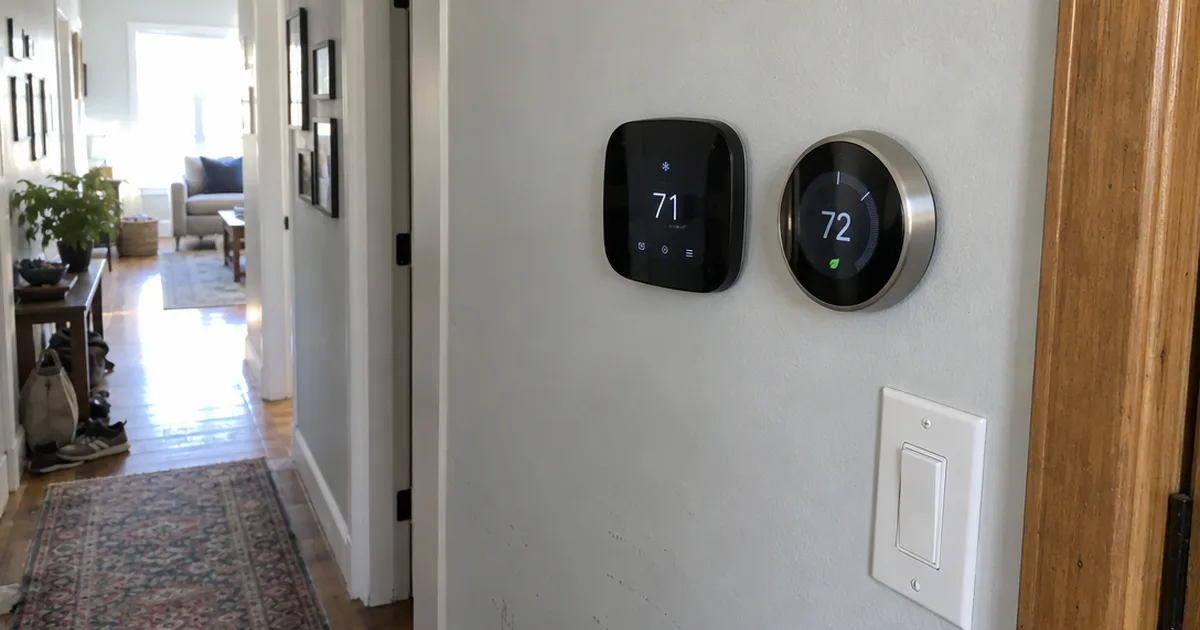
A wire on your thermostat’s C terminal doesn’t mean the C wire is connected.
The other end has to land on the right screw inside your furnace, or your smart thermostat still gets no steady power.
Where to connect the C wire on a furnace is the question readers ask most in forum threads. So you’ll get the exact terminal, the labels to look for, 7 safe steps and the setups where a pro should take over.
Best for: anyone with a spare wire in the thermostat cable and a standard gas furnace or air handler. Skip it if you have a heat pump, a zone panel or a communicating system.
Cost: Free if the spare wire is already in the cable.
Time: Same day.
First step: Turn off the furnace at its breaker, then pull the thermostat off the wall and look for an unused wire.
Where Does the C Wire Connect on a Furnace?
The C wire connects to the common terminal on the furnace control board, a screw terminal labeled C, COM or Common on modern boards. Some older systems and brands mark that same common terminal B or X instead.
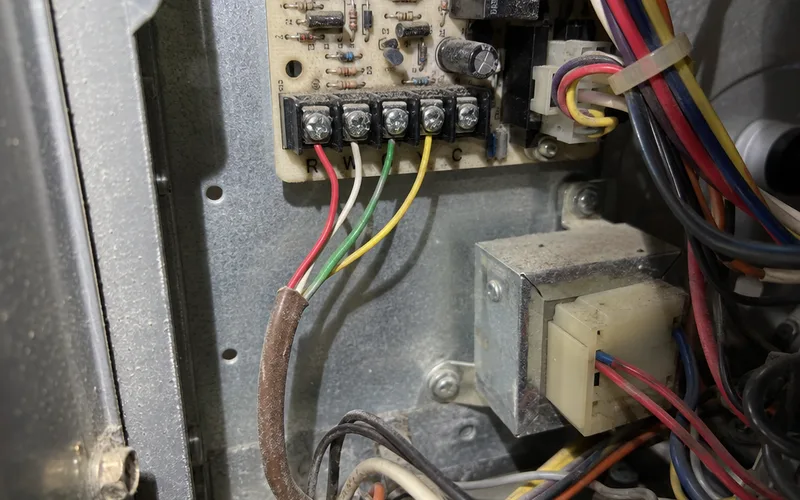
The control board is the circuit board inside the furnace cabinet where the thermostat wires end. Its low-voltage terminals sit in one row, usually marked with single letters such as R, W, Y, G and C.
Here’s how to read the labels you’re likely to find on that row:
| Label on the board | What it usually means | Before you connect |
|---|---|---|
| C | Common | Connect the spare wire here |
| COM or Common | Common, spelled out | Same as C |
| B | Common on some older boards, but the heat pump reversing valve (O/B) on others | Confirm on the door diagram |
| X | Common on some older systems or brands | Confirm on the door diagram |
| R, Rh or Rc | Low-voltage power | Never connect the C wire here |
That B row is the one to watch. On a heat pump, B can be the reversing valve terminal rather than common, so never connect to B without checking the wiring diagram first.
How to Connect a C Wire to Your Furnace Step by Step
Connecting a C wire to a furnace takes 7 steps: cut the power, label the thermostat wires, find the spare wire at both ends, open the furnace, find the C terminal, connect the wire and test. Do them in order, because each step checks the one before it.
Step 1: Turn Off Power to the Furnace
Shut off the furnace at its circuit breaker or at the service switch on or near the unit. The cabinet holds high-voltage parts as well as the low-voltage control wiring, so this step isn’t optional.
Turning the thermostat to Off is not the same thing. You want the equipment itself dead before your hands go anywhere near the control board.
Step 2: Label the Wires at the Thermostat
Pull the thermostat off its wall plate and take a clear photo of every wire and the terminal it’s on. Then label each wire by its terminal letter, not by its color.
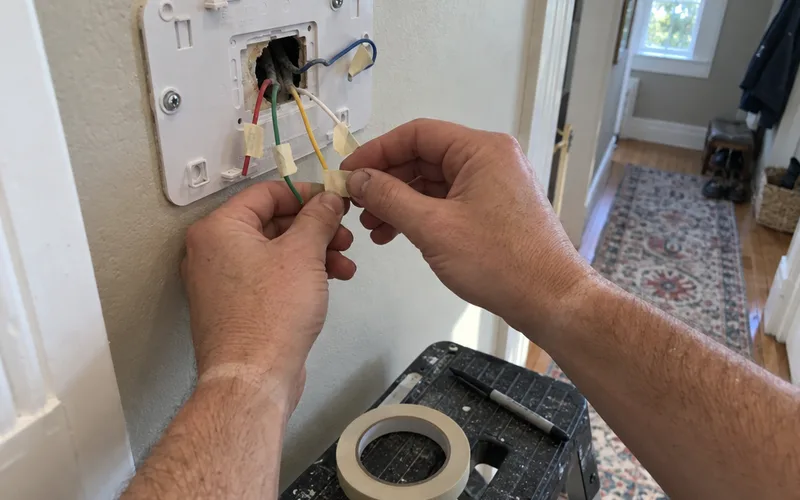
Why terminals and not colors? Wire colors are only a guide, and the same color can do a different job in an older or modified system.
Now look for the spare. It’s an extra conductor in the same cable that isn’t connected to any terminal.
Step 3: Find the Same Spare Wire at the Furnace
Follow the thermostat cable to where it enters the furnace, and look for the matching spare conductor at that end. It should be the same color as the spare you found at the thermostat, with nothing attached to it.
But don’t assume it’s there. A spare conductor may not be intact from end to end, and the cable may end at a zone panel instead of the furnace.
If the cable runs into a separate box with several thermostat connections, that’s a zone panel. Stop here, because zoned systems have their own wiring rules.
Step 4: Open the Furnace and Find the Control Board
Remove the furnace’s access panel and find the control board, the circuit board where the thermostat cable’s wires end. Use a flashlight, because you’ll be reading small letters printed beside each terminal.
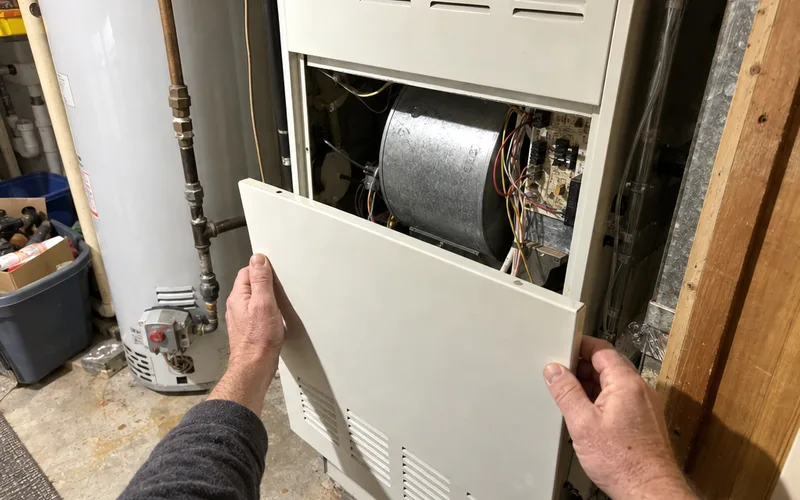
Before you touch a screw, look at the inside of the access door. The manufacturer’s wiring diagram is usually printed there, and it’s your map for the next step.
Step 5: Find the C Terminal on the Board
Find the terminal labeled C, COM or Common on the control board’s low-voltage strip, and match it against the wiring diagram on the door. If the board has no C label, look for B or X, but only treat one as common when the diagram confirms it.
Some systems also have a second transformer, each with its own common. If the diagram shows 2 transformers, or you can’t tell which terminal is common, that’s a job for an HVAC technician.
Step 6: Connect the Spare Wire to C
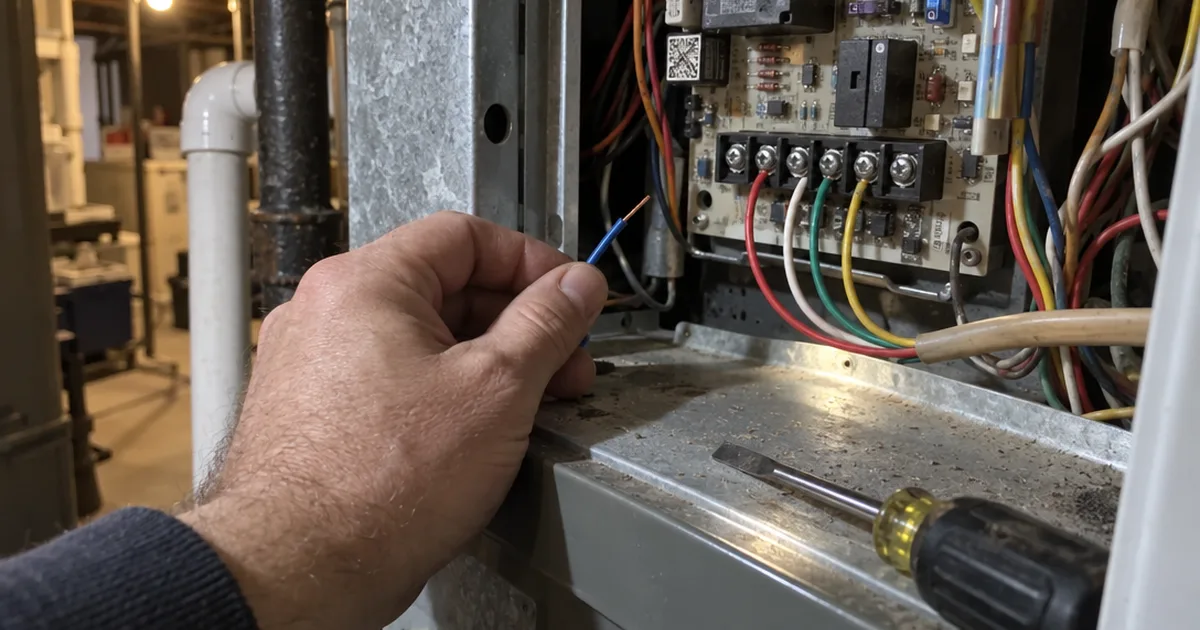
Strip the spare wire’s end if it’s still insulated, then loosen the C terminal screw and fasten the wire under it. Tighten it firmly, and give the wire a light tug to make sure it stays put.
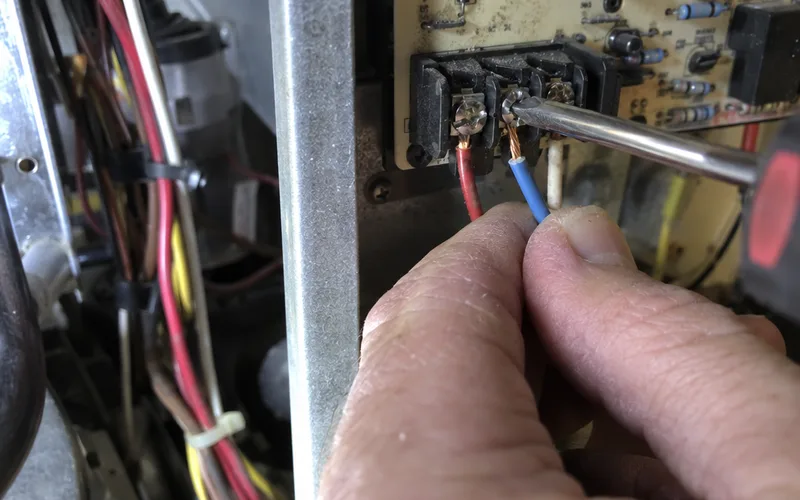
Other wires may already be on that terminal. If you’re unsure whether yours can share it, check the board’s wiring diagram before you tighten the screw.
At the thermostat, connect the same spare wire to its C terminal. Both ends have to be the same conductor, or the thermostat still won’t get steady power.
Step 7: Restore Power and Test the Thermostat
Put the furnace access panel back on, turn the breaker or service switch back on, and reattach the thermostat to its wall plate. The screen should come on and stay on.
Then run each mode once: heat, cool if you have it, and fan. If the screen goes blank, reboots or the fan acts up, turn the power back off and recheck both ends of the C wire.
What You Need to Connect a C Wire
You need a screwdriver, a phone camera, a flashlight, tape for labels and the spare wire already in your thermostat cable. A wire stripper helps if the spare wire’s end is still covered.
That short list is the whole kit for a standard system. You only need new cable or an adapter when there’s no usable spare wire.
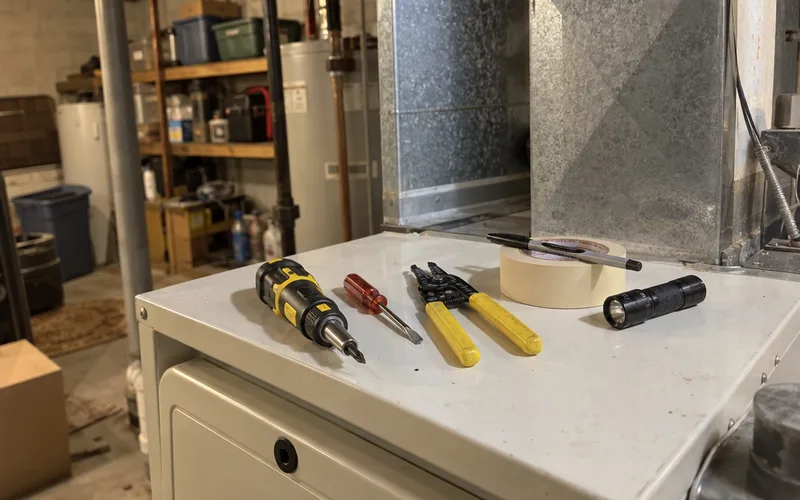
Plan to do the work with a good flashlight or headlamp. Furnace cabinets are dark, and the terminal labels are small.
Does the C Wire Power the Thermostat?
The C wire doesn’t carry the power itself. The R wire brings low-voltage power from the furnace’s transformer to the thermostat, and the C wire is the common return path that completes that circuit.
Without that return path, many smart thermostats can’t get the continuous power they need. That steady power runs their Wi-Fi, screens and sensors.
So when people say the C wire “powers” a smart thermostat, they mean it completes the loop that keeps power flowing. If you want the full picture on spotting one at the wall, the guide to the thermostat C wire covers colors and terminals in detail.
Can You Put More Than One Wire on the C Terminal?
More than one wire can sit on a furnace’s C terminal when the wiring diagram shows them all going to the same common point. Readers ask this a lot on JustAnswer and DIY forums, usually after finding 1 or 2 wires already on C.
When the diagram shows one shared common point, your spare wire simply joins the others on that terminal. Tighten the screw over all of them so none can slip out.
The catch is the boards that aren’t that simple. If the diagram shows a second common terminal or a second transformer, don’t combine their wires, because incorrect connections can damage those transformers.
Where Does the C Wire Connect on an Air Handler?
The C wire on an air handler connects to the common terminal on the air handler’s control board, the same way it does on a furnace. Look for C, COM or Common on the low-voltage strip, and confirm it on the diagram inside the cabinet door.
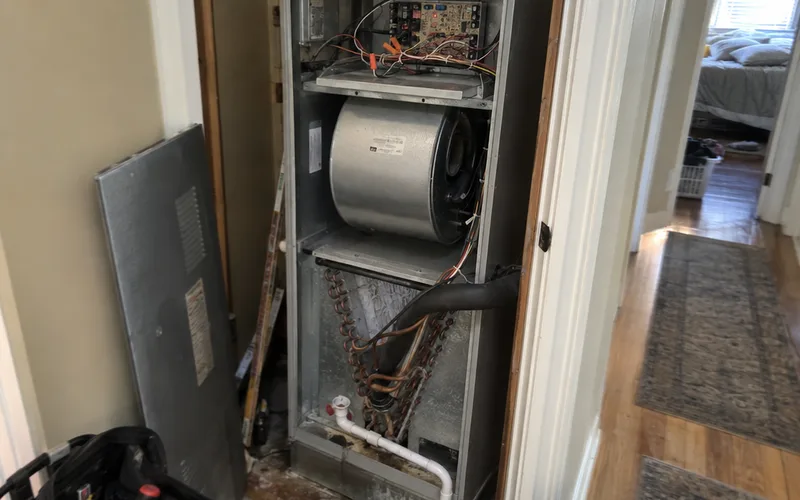
An air handler takes the furnace’s place in some homes, and the thermostat cable ends on its control board the same way. If your air handler is part of a heat pump system, though, the rules change.
On a heat pump air handler, the B label can mean the reversing valve rather than common. If your system is a heat pump, stop and have a technician confirm the C terminal before you connect anything.
Can You Use the G Wire as a C Wire?
You can use the G wire as a C wire by moving it to C at both ends, but you lose independent fan control, because G runs the fan on its own. Some equipment shouldn’t run that way at all, so treat it as a last resort.
If you rely on running the fan without heat or cooling, keep G where it is. A C-wire power adapter or a brand kit like the ecobee Power Extender Kit frees up a wire without giving up the fan.
What If There’s No Spare Wire in the Cable?
If there’s no spare wire, you have 3 options: a power kit or C-wire adapter, a new thermostat cable or a thermostat that doesn’t need a C wire. Which one fits depends on your thermostat model and your control board.
A power kit or adapter mounts at the furnace and creates a power path over the wires you already have. Compatibility still depends on the specific thermostat, the board and any zoning, staging or heat pump wiring.
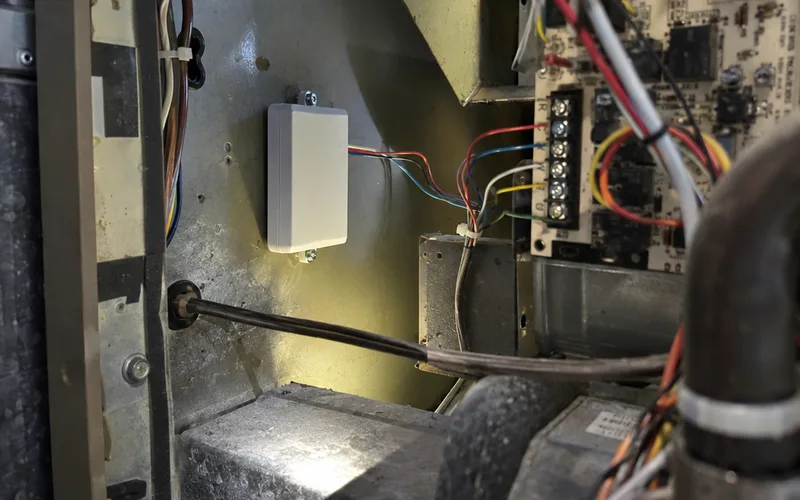
New cable gives you a dedicated common wire plus extras for later. It’s the cleanest long-term fix, and running a new C wire walks through it.
You can also compare every option side by side in the guide to what to do with no C wire. Or skip the wiring altogether with one of the smart thermostats without a C wire.
What Happens If You Connect the C Wire Wrong?
Connecting the C wire to the wrong terminal can short the low-voltage circuit and damage the furnace’s transformer or control board. That’s why the wiring diagram on the door matters more than any color or guess.
Smaller mistakes show up after you restore power. Watch for these signs that the wiring or setup needs a second look:
- The thermostat screen goes blank or keeps rebooting
- Wi-Fi drops again and again
- The fan won’t start, runs nonstop or loses its fan-only mode
- Heating or cooling stages are missing
- The system short-cycles, turning on and off quickly
Any one of those means it’s time to cut the power and recheck. Start with the C connection at both ends, since an unstable power connection or loose wire can cause blank screens and reboots.
When to Call an HVAC Technician
Call an HVAC technician when the C terminal isn’t obvious, the cable ends at a zone panel or the furnace has 2 transformers. The same goes for heat pumps, dual fuel systems and communicating equipment, because the wrong connection can affect heat, staging or the fan.
Here’s when to stop and book the pro:
- Your system is a heat pump, dual fuel or zoned
- The wiring is unlabeled, spliced or doesn’t match the diagram
- The equipment uses communicating controls
- You aren’t sure the system is low voltage at all
Line-voltage systems, such as electric baseboard heat, use different voltage and need different equipment.
If any of these fit your home, a technician can connect the C wire and test every mode. The installation cost breakdown shows what that typically adds.
For a standard system, though, this is very doable. Pair it with the full smart thermostat installation walkthrough and you can finish the whole job the same day.
Frequently Asked Questions
How do you set up a C wire?
You set up a C wire by connecting one spare conductor to the C terminal on the furnace control board and the same conductor to the C terminal on the thermostat. Turn the furnace off at the breaker first, and confirm the wire’s color matches at both ends before you restore power.
What color is the C wire?
The C wire is most often blue or black, but no color is guaranteed, because installers can use any spare conductor. Go by the terminal label at both ends, not the color, before you connect anything.
Where do you connect the C wire on a Carrier furnace?
The C wire on a Carrier furnace connects to the common terminal on the control board’s low-voltage strip, the same as on other brands. Labels vary by brand and age, so match the terminal to the wiring diagram printed inside that furnace’s access door.
Can you tell if the C wire works by looking at the thermostat?
No, a wire on the thermostat’s C terminal doesn’t prove the C wire works, because it also has to be connected to C at the furnace. Check the control board end before you assume your thermostat has steady power.
How hard is it to add a C wire?
Adding a C wire is a short job when a spare conductor already runs from the thermostat to the furnace, because you only connect it at both ends. It gets harder when there’s no spare, the cable ends at a zone panel or the system is a heat pump, and those jobs suit an HVAC technician.
Final Thoughts
The C wire belongs on the common terminal of your furnace control board, marked C, COM or Common on most boards.
Check the diagram inside the furnace door before you land it, and call a pro if you see a zone panel, two transformers or a heat pump.
This week, turn off the breaker, open the thermostat and look for a spare wire. That one check tells you whether this is a quick DIY job or a call to your HVAC company.