

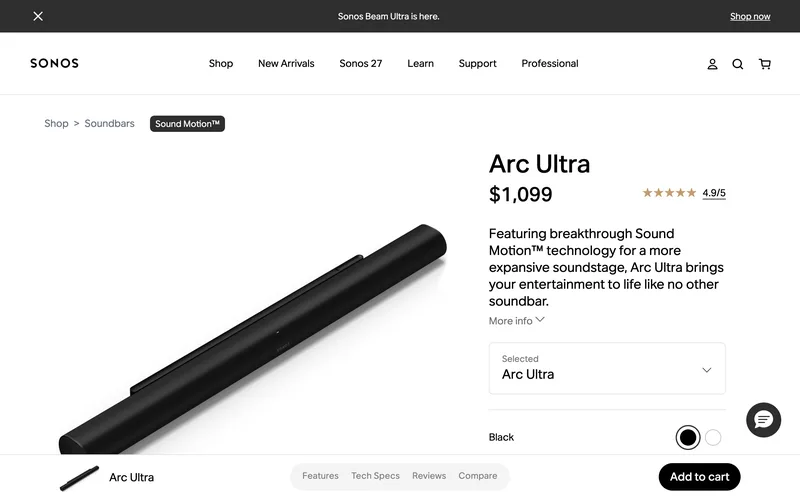
The Arc Ultra costs $200 more than the Arc, and the maker’s own store can’t even sell you an Arc.
Speaker maker Sonos now lists the original Arc as out of stock under a “Last Chance” label, as of October 2026.
So the real Sonos Arc vs Arc Ultra question: is a leftover Arc worth hunting down, or does the Ultra earn its price?
Below, you’ll get 9 head-to-head categories with a winner for each, plus a straight verdict for Arc owners.
Google Assistant runs your house: the Arc is the only one of the 2 that supports it.
Dialogue gets buried in movie soundtracks at your place? That’s exactly what the Arc Ultra fixes best.
With a smaller room or a tighter budget, the $699 Beam Ultra deserves a look before either.

Sonos Arc vs Arc Ultra at a Glance
The Sonos Arc Ultra beats the original Sonos Arc in 7 of 9 key categories, including drivers, channels, Bluetooth and Trueplay on Android. The original Arc wins only on Google Assistant support and, when you can find one, price.
Here’s how the 2 soundbars compare, row by row:
| Category | Sonos Arc | Sonos Arc Ultra | Winner |
|---|---|---|---|
| Price at Sonos (Oct 2026) | $899, out of stock | $1,099 | Arc |
| Drivers | 11 | 14, with Sound Motion woofer | Arc Ultra |
| Channels | 5.0.2 | 9.1.4 | Arc Ultra |
| Dialogue tools | Speech Enhancement | Advanced Speech Enhancement | Arc Ultra |
| Bluetooth | No | Yes | Arc Ultra |
| Voice assistants | Alexa, Google, Sonos Voice | Alexa, Sonos Voice | Arc |
| Trueplay tuning | iPhone and iPad only | iOS and Android | Arc Ultra |
| Height | 3.43 in | 2.95 in | Arc Ultra |
| Availability | Last Chance | Sonos's current flagship | Arc Ultra |
| Overall | Best for Google homes | Best for most buyers | Arc Ultra |
The short version: buy the Arc Ultra unless you need Google Assistant or find an Arc at a real discount.
What Is the Sonos Arc?
The Sonos Arc is the 2020 soundbar that brought Dolby Atmos to the Sonos lineup, playing 5.0.2 channels from one long bar.
That “5.0.2” means 5 main channels, no separate bass channel and 2 height channels for overhead effects.
Sonos’s own product page says the Arc uses eleven internal speakers, including two height channels. The spec sheet breaks that down into 3 silk-dome tweeters and 8 elliptical woofers, powered by 11 Class-D amplifiers.
Son-Video’s review notes the Arc collected a long list of press awards. It also became the center of many home theaters built from the Sonos speaker lineup.
Here’s the problem in 2026:
Sonos now sells it as a “Last Chance” product, and the US store shows it out of stock. So you’re shopping leftover retail stock or refurbished units.
The Arc is still a capable Atmos bar, and the full Sonos Arc review covers it alone. Here, it’s the budget fallback, not the default pick.
What Is the Sonos Arc Ultra?
The Sonos Arc Ultra is the 2024 replacement for the Arc and Sonos’s current flagship soundbar, playing 9.1.4 channels.
Those extra numbers matter. The “.1” is a dedicated bass channel, and the “4” means 4 height channels instead of 2.
Sonos’s compare chart lists the Arc Ultra with 14 drivers, including Sound Motion, its new woofer design. Trusted Reviews counts the rest as 6 midwoofers and 7 tweeters.
So what is a Sound Motion woofer?
It’s a compact bass driver with 4 motors and a dual membrane, according to Son-Video. The point is deep bass from a bar that’s actually slimmer than the old one.
From the front, Trusted Reviews says it looks almost the same, in the same black or white finishes. Inside, it runs a faster 1.9 GHz quad-core chip, up from the Arc’s 1.4 GHz.
Like the Arc, it joins Sonos’s multiroom system, so it can play the same music as speakers in other rooms of a whole-home audio system.
Key Takeaway: the Arc Ultra is a new speaker layout inside a familiar shape, and the Sonos Arc Ultra review covers the bar on its own.
Is There a Big Difference in Sound?
Yes, the Arc Ultra sounds clearly better than the Arc, and reviewers agree the difference shows up first in dialogue, then in bass.
Trusted Reviews found the biggest change was speech, with the Arc Ultra’s center channel tuned for clear dialogue. With the old Arc, its reviewers sometimes struggled to catch lines in films and TV shows.
The bass changed character too.
The same review called the Arc’s bass “a bit of a blunt tool,” while the Arc Ultra’s blends into the rest of the sound. That makes the jump from low notes to high notes much smoother.
Music improved as well, with more faithful bass and more detail, per Trusted Reviews.
That fits Sonos’s own goal. On the Arc’s product page, Giles Martin, who leads Sonos’s sound experience, says: “When developing a soundbar, we treat music and home theater equally.”
So if voices get lost on your current setup, clearer dialogue is the upgrade you’ll notice first.
Dolby Atmos and Height Effects
Both soundbars play Dolby Atmos, but the Arc Ultra’s 4 height channels make overhead sound more convincing.
Trusted Reviews describes a bomber in an Indiana Jones film that sounds as if it’s right above you. Son-Video found the Atmos channels more pronounced than on the older bar.

But there’s a limit.
Son-Video says the vertical effects still sit at the front, just above the TV. Trusted Reviews adds that the Arc Ultra isn’t great at faking rear channels, which you fix by adding rear speakers.
DTS:X Support: The Sources Disagree
DTS:X support on the Arc Ultra is unclear, because the sources disagree.
Trusted Reviews says neither soundbar supports DTS-HD MA or DTS:X, only basic DTS. Son-Video says its own test showed the Arc Ultra handling common DTS codecs, including DTS:X.
Sonos’s Arc spec sheet lists DTS Digital Surround with a footnote that it’s “not an indication of a licensed decoder.”
Note: if you watch a lot of DTS Blu-rays, check the format your TV actually passes to the bar before you pay for either one.
Bass and the Sub 4: Do You Still Need One?
You don’t need a Sonos Sub with the Arc Ultra in most rooms, because its Sound Motion woofer gives strong bass at higher volumes. Add a Sub 4 for quiet listening or a large room.
Son-Video found the built-in woofer needs some volume to stretch out. So it recommends the Sonos Sub 4 for quiet listening, deep-bass fans and rooms over about 375 to 430 square feet.
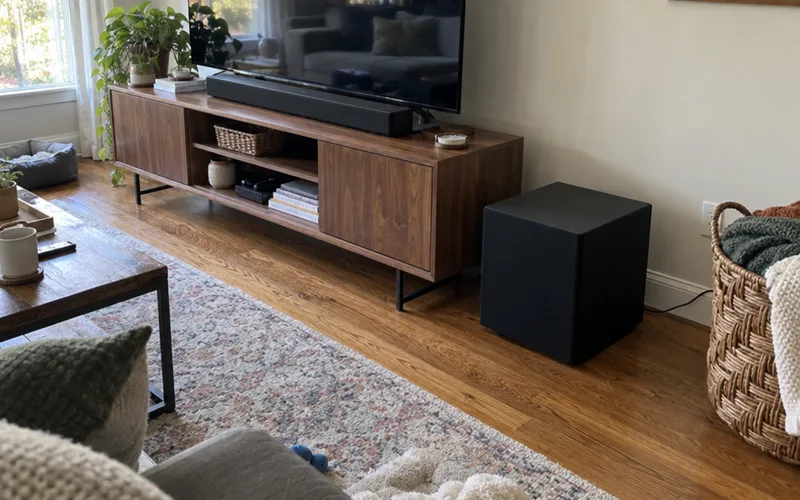
Adding the Sub 4 made the bass deeper and almost physical in its test. Sonos sells the pair as a set for $1,898, $100 off the separate prices.
Want surround sound too?
Son-Video points to a pair of Sonos Era 300 speakers, which also play rear Atmos effects. With those behind you, the overhead effects stop being confined above the TV.
A Sub plus Era 300 surrounds is the classic Sonos surround sound setup. As a set with the Arc Ultra, that full Sonos home theater costs $2,846 at Sonos.
Size, Design and Wall Mounting
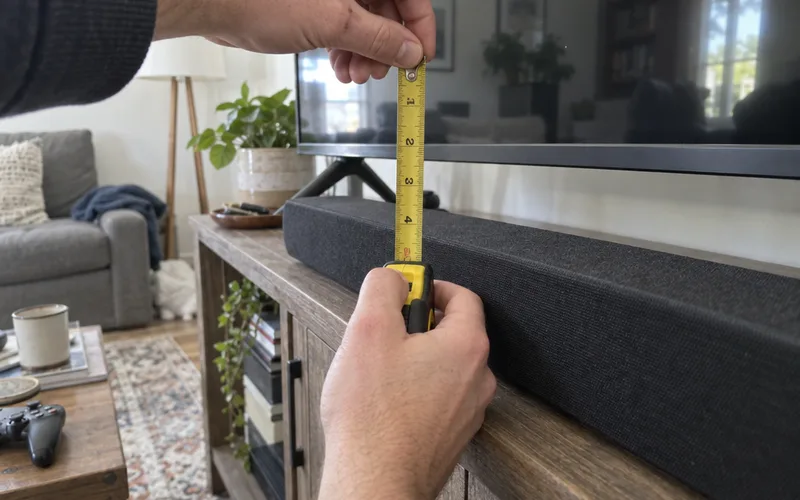
The Sonos Arc Ultra is 0.48 inches shorter, about 1.4 inches wider and slightly lighter than the Arc, and it fits the same wall bracket.
Sonos’s spec sheet puts the Arc at 3.43 inches tall, 44.96 inches wide and 13.78 pounds. GearBrain lists the Arc Ultra at 2.95 inches tall, 46.38 inches wide and 13.01 pounds.
That shorter height is the practical win.
Son-Video says the slimmer bar can sit under a newer TV without hiding the bottom of the screen. Sonos rates both bars for TVs 50 inches and larger.
What about wall mounting?
Trusted Reviews confirms the Arc Ultra supports the same wall bracket as the original Arc. If your Arc is already on the wall, the swap is mostly unplugging one bar and hanging the other.
The controls changed, though.
The Arc Ultra’s new touch strip borrows a recessed volume slider from the Sonos Era speakers. Son-Video says it’s far easier to use in the dark.
Connections: HDMI eARC, Bluetooth and Optical
The Sonos Arc and Arc Ultra both connect to your TV through one HDMI eARC port, but only the Arc Ultra adds Bluetooth.
eARC is the newer version of the TV’s audio return port, and your TV needs eARC or ARC to send Atmos to either bar.
Neither bar has HDMI inputs.
Trusted Reviews calls that a lingering frustration, since every game console and streaming box has to plug into your TV instead.
Here’s the new part:
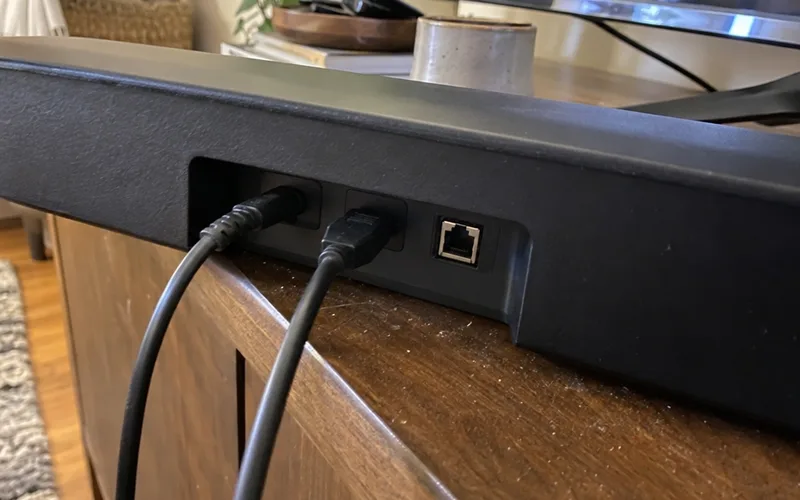
The Arc Ultra adds Bluetooth, with a physical Bluetooth switch on the back, according to Trusted Reviews. Son-Video points out that lets you stream music without connecting to your home network.
Older TV with only optical audio out?
Sonos packs an Optical Audio Adapter with the Arc. GearBrain says the Arc Ultra’s adapter is sold separately, so check the box contents before you order if your TV lacks HDMI ARC.
Both bars also stream over Wi-Fi with Apple AirPlay 2 and Spotify Connect, and both have an Ethernet port for a wired connection. So for everyday streaming, Bluetooth is the only real difference.
Voice Assistants and Trueplay
The Sonos Arc supports Google Assistant, Amazon Alexa and Sonos Voice Control, while the Arc Ultra drops Google Assistant but adds Trueplay room tuning on Android phones.
That split matters most when the soundbar is also a voice control point for the rest of your smart home hub setup.
The Google Assistant Catch
The Arc Ultra doesn’t work with Google Assistant, and that’s the single biggest reason to pick the original Arc.
Sonos’s spec sheet says the Arc works with Sonos Voice Control, Amazon Alexa, and Google Assistant. GearBrain and Son-Video both report the Arc Ultra supports only Alexa and Sonos Voice Control.
Why does that matter?
If your lights, thermostat and speakers all answer to Google, the Arc Ultra can’t join that routine by voice. That’s a real loss in a Google Home setup built around spoken commands.
Alexa homes lose nothing. Both bars handle Alexa fine, and the Amazon Alexa system can still run your other devices.
Sonos Voice Control, Sonos’s own assistant, works on both. It handles music and your Sonos system by voice, and Sonos pitches it on privacy.
Trueplay on iPhone and Android
Trueplay is Sonos’s room tuning, and the Arc Ultra brings it to Android phones for the first time on an Arc.
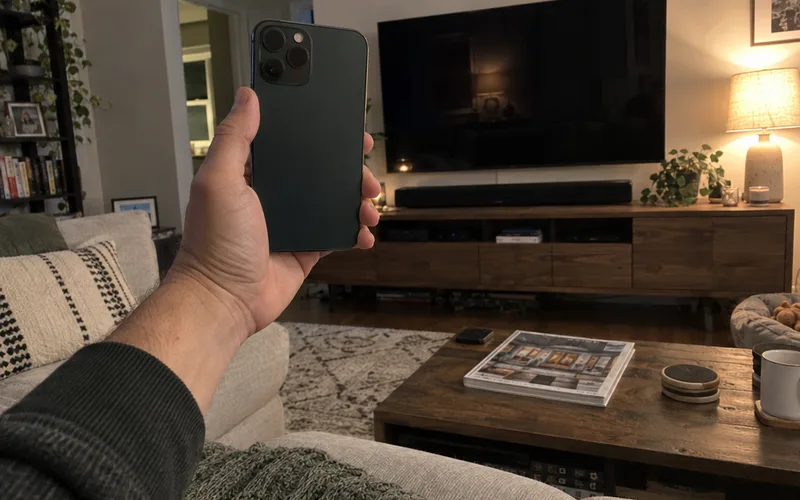
Sonos’s spec sheet says Trueplay on the Arc needs a supported iOS device. The Arc Ultra lists Trueplay for both iOS and Android.
Son-Video explains that Android tuning uses the soundbar’s own microphones. On an iPhone, you still get the advanced version, where you move the phone around the room while it measures.
Son-Video says both methods gave very good results in its test room. Either way, you run it from the Sonos app as part of Sonos speaker setup.
Price: What Each Costs in October 2026
As of October 2026, Sonos’s US store lists the Arc Ultra at $1,099, while the Arc sits at $899 and out of stock.
Prices have moved since launch. Trusted Reviews reported the Arc launched at $799 before rising to $899, and the Arc Ultra arrived at $999.
So the Arc Ultra now costs $100 more than when it came out.
GearBrain even listed the Arc at $719 in December 2024. Treat any price from before 2026 as history, not a quote.
Sets can bring the cost down if you plan to expand:
- Arc Ultra + Sub 4: $1,898, $100 off the separate prices.
- Arc Ultra + 2 Era 300 speakers: $2,002, $95 off.
- Arc Ultra + Sub 4 + 2 Era 300 speakers: $2,846, $150 off.
If you know you’ll add a Sub within a year, the set is the cheapest way to get there.
Is It Worth Upgrading From the Arc to the Arc Ultra?
Upgrading from the Arc to the Arc Ultra is worth it if dialogue or bass bothers you, but not if you rely on Google Assistant.
In a May 2025 comparison, Trusted Reviews, which reviewed both bars, called the Arc Ultra a big step up in dialogue and bass and worth the jump in price.

But think about what you already own.
If your Arc already has a Sub and rear speakers, those already handle the deep bass and surround effects the Ultra improves. The upgrade then mostly buys you clearer dialogue, Bluetooth and Android Trueplay.
Here’s a quick way to decide:
- Upgrade if you use the bar alone and strain to hear voices.
- Upgrade if you want Bluetooth or Android Trueplay.
- Wait if Google Assistant runs your home.
- Wait if a full Sub and surround setup already makes you happy.
Before you buy, check whether the Sonos Upgrade Program, linked from Sonos’s site, has an offer for Arc owners.
Is the Sonos Arc Still Worth Buying in 2026?
The Sonos Arc is still worth buying in 2026 only at a clear discount from the Arc Ultra or in a Google Assistant home.
It still plays real Dolby Atmos with upward-firing drivers, and it still joins every Sonos speaker.
The math is what decides it.
At $899 against $1,099, the Arc saves you only $200 and gives up the Arc Ultra’s dialogue and bass gains. Say you find a refurbished Arc for a few hundred dollars less; that’s when it becomes a smart buy.
So shop the price, not the name.
Arc Ultra vs Beam Ultra: Which Fits Your Room?
The Sonos Beam Ultra, at $699 as of October 2026, fits smaller rooms and TVs up to 65 inches, while the Arc Ultra suits large rooms and TVs of 50 inches and up.

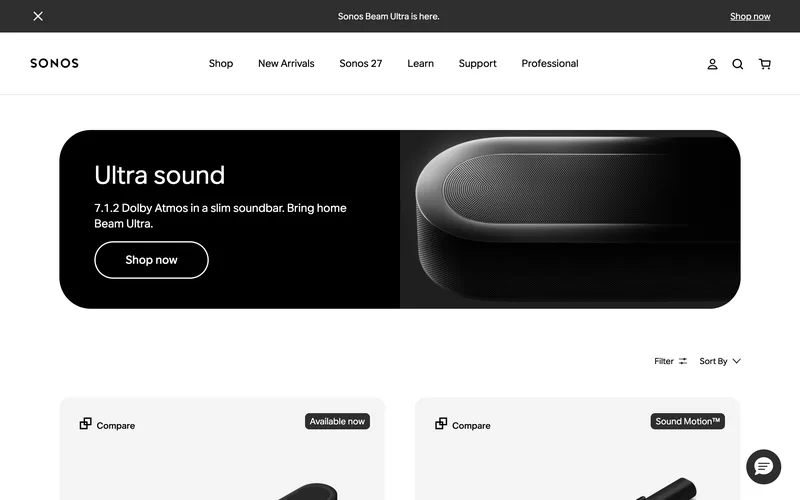
Sonos’s soundbar page describes it as 7.1.2 Dolby Atmos in a slim soundbar. That puts it between the old Arc’s 5.0.2 and the Arc Ultra’s 9.1.4 on paper.
Here’s how the 3 line up:
- Beam Ultra: $699, compact, for TVs up to 65 inches.
- Arc: $899 when in stock, 11 drivers, for TVs 50 inches and up.
- Arc Ultra: $1,099, 14 drivers, for large rooms and TVs.
If your TV is under 50 inches and your room is modest, start with the Beam Ultra; between 50 and 65 inches, either size works. If you’re weighing other brands too, the Sonos vs Bose matchup covers the main rival.
Who Should Choose the Sonos Arc Ultra
The Sonos Arc Ultra is the right choice for most people buying a Sonos soundbar for a TV of 50 inches or more. Pick it in these situations:
- You want Bluetooth for guests or quick music.
- Dialogue is hard to follow on your current setup.
- You want strong bass without buying a Sub right away.
- Someone in your home uses an Android phone and wants Trueplay.
Who Should Choose the Sonos Arc
The original Sonos Arc is the right choice mainly for Google Assistant homes and for buyers who find one well below the Arc Ultra’s $1,099 price. Pick it in these situations:
- Google Assistant runs your lights, thermostat and speakers by voice.
- A leftover or refurbished Arc costs a few hundred dollars less than an Arc Ultra.
- You already have a Sub and rear speakers, so the Arc Ultra’s bass gains matter less.
- Your TV only has optical out and you want the adapter in the box.
Frequently Asked Questions
Is the Arc Ultra that much better than the Arc?
Yes, the Arc Ultra is clearly better than the Arc for dialogue and bass, which are the 2 changes reviewers noticed first. Trusted Reviews called it a big step up and worth the extra price, though the 2 bars share the same HDMI eARC setup and audio formats.
Is Sonos discontinuing the Arc?
Yes, Sonos is phasing out the original Arc, which the Arc Ultra replaced in 2024. As of October 2026, Sonos’s US store lists the Arc at $899 under a Last Chance label and shows it out of stock, so expect to find it only as leftover or refurbished stock.
Does the Sonos Arc Ultra have Dolby Atmos?
Yes, the Sonos Arc Ultra plays Dolby Atmos through upward-firing drivers that bounce height effects off your ceiling. For Atmos, connect it to your TV’s HDMI eARC or ARC port rather than through the optical adapter.
Does the Arc Ultra have Bluetooth?
Yes, the Arc Ultra has Bluetooth, with a physical Bluetooth switch on the back, while the original Arc has none. Both bars also stream over Wi-Fi with Apple AirPlay 2 and Spotify Connect.
What are the key differences between the Sonos Beam and Arc soundbars?
The Sonos Arc is bigger and more immersive than the Beam (Gen 2), with 11 drivers to the Beam’s 5 and real upward-firing height drivers. Sonos sizes the Beam for TVs up to 65 inches and the Arc for TVs 50 inches and up, and lists the Beam at $499.
Final Thoughts
For most people, the Arc Ultra wins this matchup on dialogue, bass and Bluetooth.
The original Arc only makes sense for Google Assistant homes or at a real discount.
This week, check which voice assistant your household actually uses.
That one answer settles most Sonos Arc vs Arc Ultra decisions.