A touch-activated kitchen faucet costs about 12 times what a smart speaker does.
On Ferguson’s product listings, the Delta Trinsic starts at $689.00 and a Google Nest Mini Gen 2 at $57.09.
So the order you build a smart kitchen in matters.
Here’s what one is, how it works and what each step costs.
What Is a Smart Kitchen?
A smart kitchen is a regular kitchen where some appliances connect to your home network, so you can control them by app or by voice.
Think of it as one room of a smart home, built around cooking, food storage and meal prep.
A smart refrigerator looks like any other, though some add a touch screen on the door, and the real difference is the radio inside and its mobile app.
If the bigger picture is still fuzzy, read up on how a smart home works, then come back to the kitchen.
What a Smart Kitchen Includes
A smart kitchen usually includes a connected fridge, oven, range hood, dishwasher or coffee maker, plus a touch faucet, smart lights and sensors.
Here’s what each piece adds:
- Refrigerator: cameras let you check your food from the grocery store.
- Oven, stove or cooktop: preheat from your phone on the drive home.
- Range hood: ventilation ramps up on its own while you’re cooking.
- Dishwasher and coffee maker: cycles run on a schedule.
- Faucet: a touch turns on the sink when your hands are covered in ingredients.
- Sensors and lighting: leak alerts reach your phone, and countertop lights follow a schedule.
Most kitchens get smart one device at a time, so compare the smart appliances for your kitchen before you replace anything.
A connected fridge is a big purchase, so weigh its pros and cons first.
How Does a Smart Kitchen Work?
A smart kitchen works by linking each appliance to Wi-Fi, Bluetooth or a hub, so an app, your voice or a sensor can run it.
Wi-Fi reaches an appliance from anywhere, while Bluetooth only reaches devices nearby.
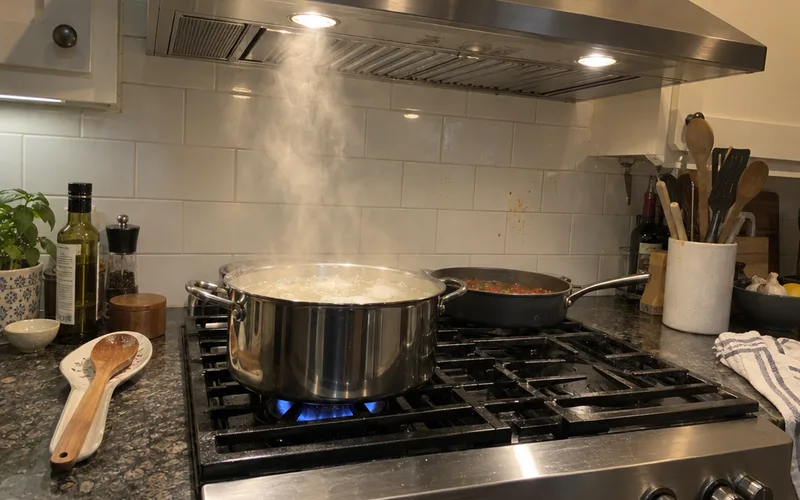
For example, Ferguson’s buying guide describes Bluetooth range hoods that turn on when humidity sensors trip or the stove passes a set temperature.
A virtual assistant like Alexa adds voice control, so you can set timers or hear a recipe step hands-free.
Mixing brands? Look for the Matter standard, which is built to let different makers share one app.
Do Smart Kitchen Appliances Need Wi-Fi?
Smart kitchen appliances don’t need Wi-Fi to cook or clean. Ferguson’s retailer guide says a smart fridge or oven range can be used without its connected features.
What you lose offline is the remote part: app control, alerts and voice.
If an appliance drops off your network, reconnect it in its maker’s app, the same job as connecting GE appliances to Wi-Fi.
Do You Need a Hub or Alexa for a Smart Kitchen?
A smart kitchen often needs a separate hub or smart speaker, such as Google Nest or Amazon Alexa, according to Ferguson’s smart kitchen guide.
Each brand also pushes its own app, so 3 brands can mean 3 apps and no shared automation.
That’s why I’d settle Alexa vs. Google Home before buying any kitchen gear.
How Much Does a Smart Kitchen Cost?
A smart kitchen costs from $57.09 for a smart speaker to $1,899.00 or more for one Samsung induction cooktop with Wi-Fi, on Ferguson’s product listings.
A $689.00 Delta touch faucet sits in between.
Your total depends on how many appliances you replace, and prices change, so check before you budget.
The cheapest way to get connected appliances is to buy them when your old ones wear out anyway.
How to Make an Existing Kitchen Smart Without Remodeling
You can make an existing kitchen smart without a remodel by adding plug-in devices first and connected appliances later.
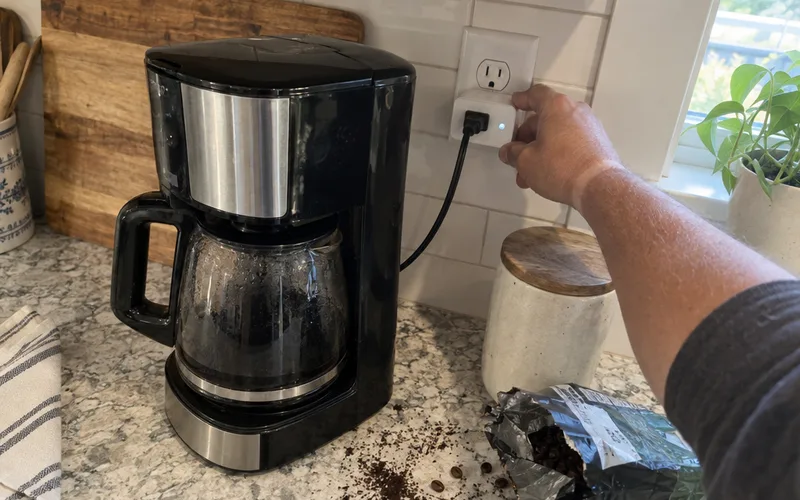
Here’s the order I’d follow:
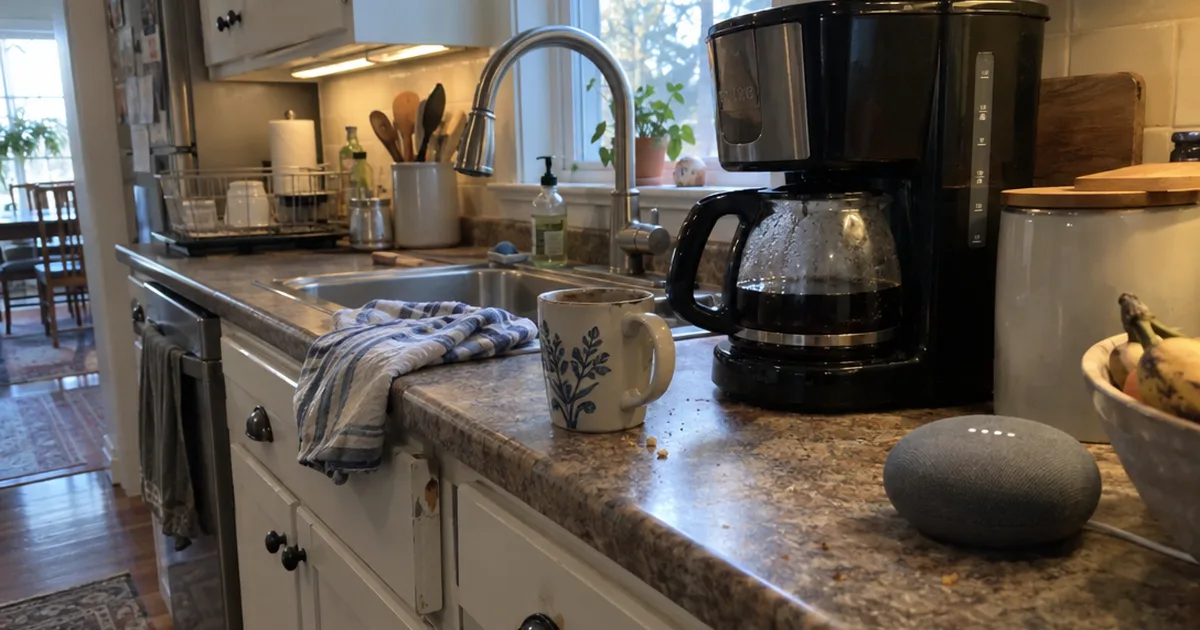
- Put a smart speaker on the counter for timers, lists and recipes.
- Put a countertop gadget on a schedule, one of the most common smart plug uses.
- Swap the bulbs over your prep area for smart bulbs.
- Set a water leak sensor under the sink.
- Buy the connected version of the next appliance that breaks.
Steps 1 to 4 need no wiring or design changes.
Is a Smart Kitchen Worth It?
A smart kitchen is worth it when a device fixes a daily annoyance, like forgetting to preheat the oven. A device that only adds an app you’ll never open isn’t worth it.
Expect higher prices, maybe a hub and a phone full of apps, the usual smart home trade-offs.
Start with one speaker this week, and let your next broken appliance decide the rest.
Frequently Asked Questions
What are smart home appliances?
Smart home appliances are ordinary appliances, such as refrigerators, ovens and coffee makers, with Wi-Fi or Bluetooth so an app or voice assistant can control them. Their knobs still work offline.
What is the best smart device for a kitchen?
A smart speaker is the best first smart device for most kitchens, because it costs the least and runs timers and recipes by voice. Ferguson’s listing shows a Google Nest Mini Gen 2 from $57.09.
What are some popular kitchen tech gadgets?
Common kitchen tech gadgets include smart speakers, touch faucets, smart plugs, smart bulbs and leak detectors, plus connected fridges and ovens.